

Takeaways from The Predictive Validity Of Test Scores In College Admissions
The data is in (again)

Nobody likes meaningless tests. Entrance exams like the SAT & ACT are valuable when they can inform both test takers and target institutions about the likelihood of success at the next level. So do they? Amy and Mike invited educator David Blobaum to explore the predictive validity of test scores in college admissions.
Listen to the full episode HERE before or after you review the key takeaways, topic breakdowns, and questions answered from this episode.
Key Takeaways
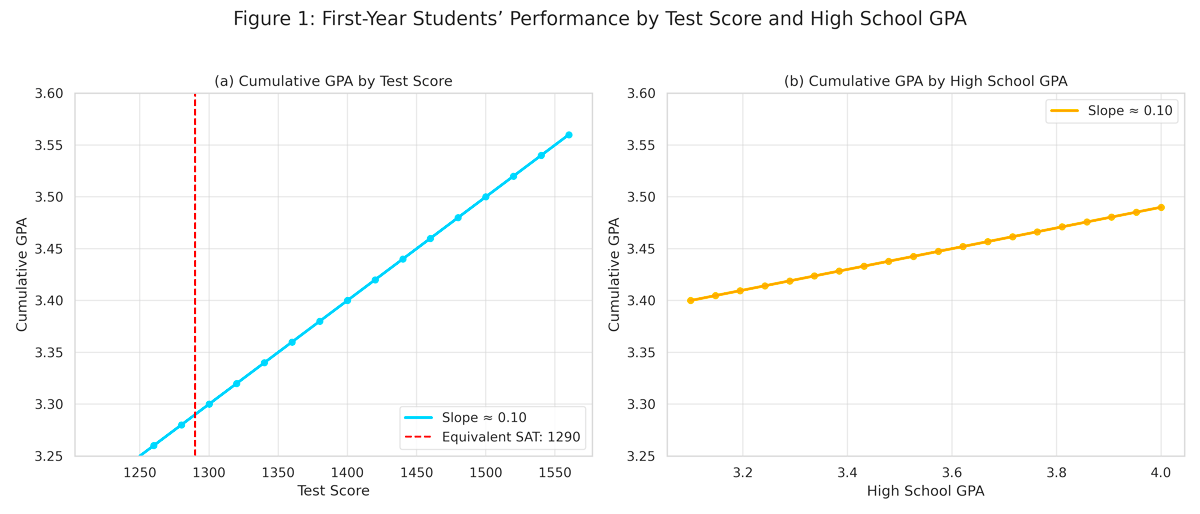
Recent research shows SAT/ACT scores are 3.9x more predictive of first-year college GPA than high school grades at selective schools
Many "test-optional" schools still strongly prefer or expect test scores, especially for competitive STEM programs
AP exam scores are increasingly being used as an alternative metric, raising equity concerns due to limited access
PRESENTED BY ROOTS2WORDS

We are all judged on the words we use, especially when we take high-stakes exam that use vocabulary mastery as a leading indicator of reading acumen. The free Roots2Words Word of the Day is just the beginning of learning to unlock the English language word by word and root by root. Encourage the test takers, language learners, and word lovers in your life to subscribe today. Then do the same yourself!
Topical Breakdown
Predictive Validity of Test Scores
At Ivy+ schools, SAT/ACT scores alone predict 19.3% of first-year GPA vs. 5% for high school grades
Adding grades to test scores only increases predictive power from 19.3% to 19.6%
Test scores also predict graduation rates, future earnings, and prestigious graduate school/career placement
At UT Austin, score submitters had 0.86 higher first-year GPAs on a 4.0 scale
Test-Optional Policies and Realities
Many schools remain "test-preferred" despite optional policies (e.g. UIC: 59% overall submitted, 81% for Engineering)
Selective schools/majors generally value scores more highly
USC doubled admission chances for score submitters despite claiming "truly optional" policy
UC system banned from using SAT/ACT but considers AP/IB scores
Trends in Score Consideration
Growing use of AP scores (e.g. Caltech requiring all taken, Emory weighing more than GPA)
Raises equity concerns due to limited AP access compared to SAT/ACT
More schools moving towards "test-preferred" stance for future admissions cycles
Recent increase in students submitting scores as families recognize the advantage
Next Steps
Families should carefully research individual school policies beyond surface-level "optional" claims
Consider taking SAT/ACT even if schools are optional, especially for selective programs
Be aware of growing importance of AP scores at some institutions
Stay informed on rapidly evolving testing policies in college admissions
Q&A
Background and Experience
What advocacy work has David done through the National Test Prep Association?
Represents NTPA in public (TV, op-eds)
Educates families about testing and admissions
Advocates for appropriate use of testing
Featured in Chicago Tribune and Inside Higher Ed
Predictive Validity of Test Scores
How predictive are SAT/ACT scores compared to high school grades for college success?
At selective schools, SAT/ACT scores vastly more predictive than grades
High school grades predict 5% of college GPA
SAT/ACT scores alone predict 19.3% of college GPA
Adding grades only increases prediction to 19.6%
What do test scores predict beyond first-year GPA?
Also predict graduation rates, future earnings
Predict likelihood of attending prestigious graduate/professional schools
More predictive than previously thought, even controlling for other factors
Are test scores only valid predictors for selective schools?
Most useful at selective schools due to grade compression
Still predictive at less selective schools, but gap narrows
At UT Austin, score submitters had 0.86 higher first-year GPA
Test-Optional Policies
Why haven't more colleges returned to requiring test scores?
Allows colleges to artificially lower admit rates
Gives illusion of selectivity
Lets colleges admit more athletes/institutional priorities without lowering averages
How "optional" is test-optional at different schools?
Varies greatly by selectivity of school/program
More selective = more likely to prefer/require scores
STEM programs tend to be more test-preferred
Are test-optional schools admitting submitters and non-submitters at the same rates?
Almost always admit score submitters at higher rates
E.g. Amherst admits submitters at 2.5x the rate of non-submitters
University of California System
Is the UC system truly test-blind?
Not truly test-blind, despite claims
Use AP/IB/A-level scores in admissions
Need alternative metrics due to grade inflation
What are the issues with using AP scores instead of SAT/ACT?
Less access to AP courses/exams
More expensive than SAT/ACT
Fewer fee waivers available
Not as standardized across subjects
Future Trends
Are more schools likely to require or prefer test scores in coming years?
Moving towards test-preferred policies
Increase in students submitting scores
More schools encouraging submission of AP scores
Yes, but I’m sure you are aware of Dale and Kruger‘s research that suggests the benefits that accrue to students may be a function of self selection. That is students with more ambition and drive apply to elite institutions. For all the benefits of background characteristics, better educational environment, more social and cultural experiences that accrue most of the students attending elite institutions it’s difficult to tease out the effects of the institutions themselves. I have often fought that the most important thing elite institutions do is admit their students and then they take the credit for their subsequent success.
Test, scores and family income are highly correlated. The best predictors of a students income after graduating from college their family income and parental occupational status. Telling readers that test courses are associated with higher income is misleading.